
Stubborn bacteria threaten the chestnut population in Schiedam
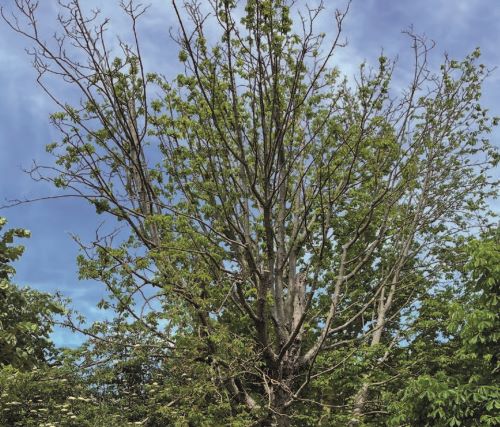
The chestnut trees are having a hard time. A persistent bacterium causes the so-called 'Chestnut bleeding disease'. Almost all chestnut trees in Schiedam are therefore in ruins. Yet there is hope for the trees. The bacteria can be combated using a special technique.
Source: Schie.nu | Chestnut bleeding disease is caused by a bacterium. Rust-brown, viscous fluid-filled spots appear on the bark of the tree. The bacterium lodges itself in the cells responsible for transporting nutrients. Because the cells become clogged, the tree's sap flow decreases.
More than 240 sick chestnut trees
The municipality of Schiedam would like to keep trees and greenery in the city for as long as possible. There are more than 240 chestnut trees throughout the city. According to Maarten Bekkers, a large proportion of these are carriers of the 'Chestnut bleeding disease'. Bekkers is the Green process manager of the municipality of Schiedam. “In general you can say that they are all affected to a greater or lesser extent. A very large proportion have it.”
Fever therapy
Marc Derksen is an entrepreneur at Treehold. In collaboration with various parties, they treat chestnut trees, among other things. “We neutralize that bacteria by actually giving fever therapy for a short period of time. We heat the tree so that harmful bacteria are eliminated and the tree can then resume its recovery. With infrared we actually give that tree a boost in a sustainable way.”
Bekkers: “The method we have used here is not new, but the technology is. From the past we know of a method that kills pathogens with warm water. That was extremely intensive and expensive. This new, innovative technique reduces the treatment time to four hours per tree. This makes it interesting to apply in the urban tree population.”
Pilot
The municipality has started a pilot to combat the disease under the trees. In the coming months, 20 trees will be treated using a special technique. Depending on the effectiveness of the treatment, more trees may be treated in the future.
In 2019, this method was experimented for the first time in Schiedam. It is therefore difficult to say how effective the method is. “We only treated it for the first time two years ago and we only did three. We have monitored the trees we have treated every year. The way it looks now, it seems like the trees are getting better. But those are only three trees, so we cannot make any really scientific statements about that. That is why it is so important to expand this trial and continue the monitoring program.”
Treating the trees is not cheap. Depending on the technique used, the costs can range from 200 to 1000 euros per tree. Nevertheless, according to Bekkers, this method was deliberately chosen: “We do not have many monumental Horse Chestnuts left in the city and those that we do have, we actually want to go very far to preserve them for the city. As long as this is possible responsibly and safely. This is one of the ways you can preserve them for the future.”